Showing posts with label film. Show all posts

Friday, January 13, 2017

Let's Connect an Author, Actress & Film Director to Alabama!

On a blog by author BV Lawson called In Reference to Murder, I recently read a review of Hugh Cosgro Weir's 1914 short story collection, Miss Madelyn Mack, Detective. I do such things on long winter evenings. The five stories describe cases of one of the early American female detectives in fiction and her pal, reporter Nora Noraker. At the end of the review Lawson notes that two silent films had been made from the stories and starred Alice Joyce as Madelyn Mack.

Well, as I often do in these situations, I wondered if there was an Alabama connection buried in here somewhere. Lawson says author Weir was born in Illinois and worked as a journalist in Ohio. He also wrote stories for the pulp magazines. The FictionMags Index lists a number of stories for Weir and gives his dates as 1884 to 1934. Some brief searching produced nothing more on Weir, so I moved along.

What about Alice Joyce? From her Wikipedia page we learn that she appeared in more than 200 films between 1910 and 1930; she died in 1955. Joyce was born in Kansas City, so no Alabama link there. But wait--what do I see? Her third husband, from 1942 until 1945, was none other than film director Clarence Brown. And there you have it--the Alabama connection.

Say what? It's like this. Born in Massachusetts, Brown developed an interest in films as a young man. He served in World War I and by 1920 he was directing and continued in that role into the early 1950's. Brown's films were nominated for some 38 Oscars; he was nominated for best director five times, but never won. He directed Joan Crawford in six films and Greta Garbo in seven. He also worked with Clark Gable and Jimmy Stewart and directed Intruder in the Dust based on the novel by William Faulkner. 

Brown died in 1987 at the age of 97. So where's the Alabama link? Brown's family moved to Tennessee when he was 11, and he graduated from the University of Tennessee in Knoxville at age 19 with two engineering degrees. He worked briefly for the Stevens-Duryea car manufacturer in Massachusetts, and then moved to Birmingham to set up an auto dealership, the Brown Motor Car Company. Brown later said after visiting a nearby nickelodeon on lunch break, he decided to enter the film business. In 1913 he went to work for Peerless Studios in Fort Lee, New Jersey, then a center of silent movie production.

Brown is one of three prominent film directors with Birmingham connections. I'll be doing a blog post on all of them one of these days. 


Alice Joyce [1890-1955] in Photoplay magazine in 1917

Source: Wikipedia 


Clarence Brown [1890-1987]

Source: Wikipedia 


Tuesday, November 15, 2016

Movies with Alabama Connections (10): Alabama Jones

My investigations of many things Alabama-related can lead to some pretty odd places. Case in point: this bit of erotica, which actually has TWO Alabama connections.

I haven't seen this film, but the type is well-known. In recent years any major box office hit has gotten an erotic remake--er, rip off; the numbers are legion. This genre echoes the "Eurospy" French and Italian films of the 1960's and 1970's that rode the success of James Bond films. Alabama Jones was directed by Jim Wynorski [under the name Harold Blueberry], a well-known figure in erotic and exploitation genres. 

The film has a state connection beyond the title. One of the leads is Angela Little, born in Albertville in 1972. In the film she is billed as Katie James. In addition to work in the adult film industry, Little has also acted in mainstream films and television shows including Rush Hour 2, Charmed, CSI and Monk. She was Playboy magazine's Playmate of the Month in August 1998.

For some reason, Little's screen name doesn't appear on the DVD cover below. I presume the three names listed were bigger stars in the industry in 2005 when the film was released. 

Other characters in the film include California Jones and Oklahoma Jones. I leave historical researchers in those states to do their duty at some point.


Angela Michelle Little


Tuesday, October 25, 2016

Movies with Alabama Connections (9): Right of the Strongest

In the early part of the 20th century Francis Nimmo Greene [1867-1937] was a popular Alabama author; today she is probably unknown to all but scholars of the state's literature. From 1901 until 1920 she wrote successful books for both adults and children. Born in Tuscaloosa, Greene was also a teacher, library worker, newspaper columnist and later in life an author of plays. She died in Birmingham.

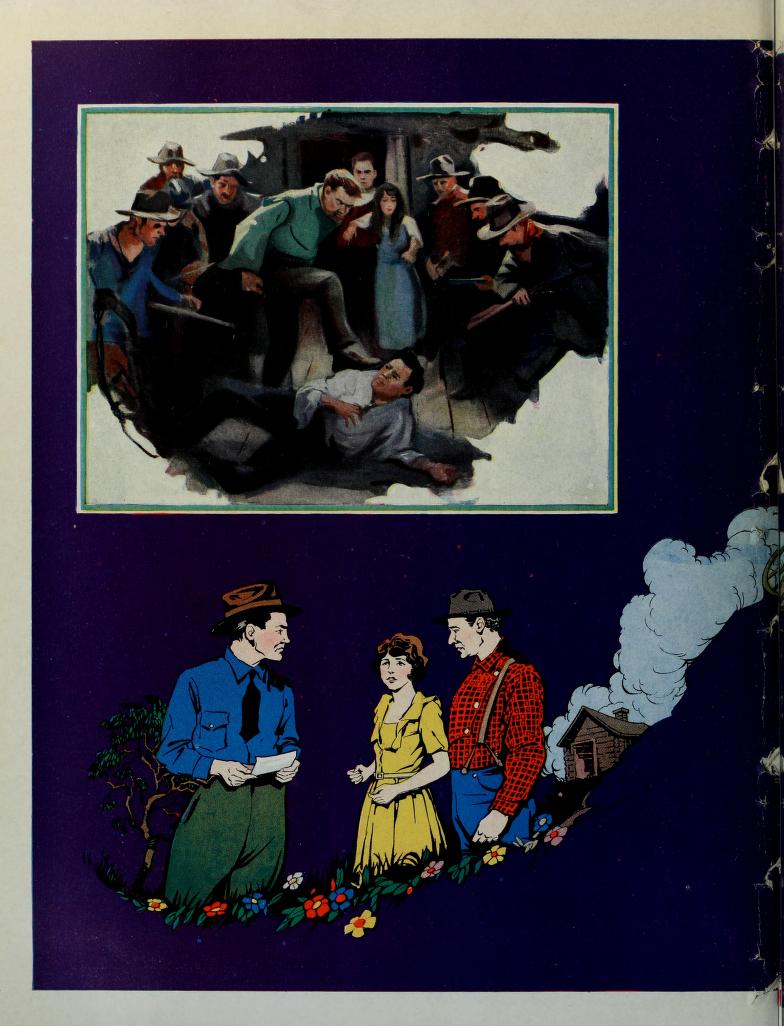
In April 1924 Zenith Pictures and David Selznik's Distributing Corporation released the film version of one of her popular novels, The Right of the Strongest. Greene's Encyclopedia of Alabama entry by Dorothy Grimes describes the book's plot: "The story involves a woman caught between two men, a progressive developer and a man of the hill country, and anticipates modern environmental and social issues concerning the use of natural resources." 

Helen Ferguson played heroine Mary Elizabeth Dale. Actors E.K. Lincoln and George Siegmann starred as John Marshall and Trav Williams. The film was directed by Edgar Davis. All four individuals were veterans of silent film. One of the ads below describes the film as "A tense, enthralling, fast-action melodrama which presents a colorful portrayal of life among the 'hill-billies' and feudists of the Alabama mountains." Another claims that the movie is "one of the greatest melodramas ever filmed."

The book is available via the Internet Archive. I have been unable to determine the length of the film or whether a copy has survived. Further research might also determine theaters in Alabama where the film played and reactions of state citizens. 


This double-page color advertisement appeared in Film Daily 6 July 1924


E.K. Lincoln in 1919 

Source: Wikipedia 


Helen Ferguson [1901-1988]

Source: Wikipedia 


George Siegmann [1882-1928]

Source: Wikipedia


Tuesday, August 2, 2016

Movies with Alabama Connections (8): The Big Gamble

This 1931 film actually has two Alabama connections. The female lead is Birmingham native Dorothy Sebastian. The film is based on a novel by Octavus Roy Cohen, a prolific author who spent a number of years in Birmingham and who set many short stories in the city. I've posted about Sebastian in my "Film Actresses from Alabama before 1960" series and Cohen in my "Alabama Book Covers" series. 

Sebastian's male co-star in the film was her husband at the time, Bill Boyd. Sebastian and Boyd were married in December 1930 in Las Vegas. They had met the previous year while making the film His First Command. The couple divorced in 1936. By that time Boyd was just beginning to play the character that would make him even more famous, Hopalong Cassidy.

Some other interesting actors show up in The Big Gamble. Warner Oland played the villain; he was well known for his roles in other films as Fu Manchu and Charlie Chan. ZaZu Pitts had a long career in both dramatic and comedic roles stretching from silent films into the early 1960's. 

Below is the New York Times original review of the film from September 1931. The story is pretty contrived and ends as you would expect, but the Alabama connections kept me watching to the end. The Big Gamble is the first film with Birmingham native Dorothy Sebastian that I've seen, and I'll have to look for more. 


The Big Gamble poster

Source: Wikipedia


Cohen's novel was published in 1925.


On the film's release in 1931, the New York Times ran this review: 


The man with a year to live is stalking heroically and a bit sadly across the Hippodrome screen this week in "The Big Gamble," which started its public career as a novel by Octavus Roy Cohen called "The Iron Chalice." The situation is a reliable standby for the amusement-hunter who likes an hour of honest suspense between the sinister beginning and the happy ending. With James Gleason and ZaSu Pitts on hand to make funny faces at the plot, after those scenes in which Warner Oland has sent out a new ultimatum to the doomed man and lured the spectators to the tense edges of their seats, "The Big Gamble" fits without a jar into the Hippodrome program between the acrobats and the newsreel.

Alan Beckwith, gambler, is at the end of his rope, but before quitting life he wants to square his debts. Mr. North, who has a proposition for every occasion, agrees to take care of the debts if Beckwith will marry a certain woman, who shall be named beneficiary in a $100,000 insurance policy. At the end of a year, the policy being ripe for payment, Beckwith will die in an "accident" and Mr. North will be richer by his death.

Naturally the inscrutable Mr. North had not counted on his pawns falling in love. A year is a short time and love is stronger than Mr. North and all his paid gunmen. Beckwith and his wife work furiously against the deadline and manage to scrape enough money together to pay back Mr. North. Then, on Dec. 31, Mr. North announces that he wants $100,000 or nothing. In the last five minutes before Beckwith and his wife pose for the happy fadeout, "The Big Gamble" offers a wild midnight automobile chase and a final dash of the gangster car down an embankment that was exciting enough to whip yesterday's spectators into scattered applause.
Bill Boyd and Dorothy Sebastian officiate as the gambler Beckwith and his wife. Warner Oland compounds his usual expert villainies in the rôle of North. As a small-time tout who aspires to a gunman's career, James Gleason is amusing, and as his bickering wife ZaSu Pitts again exhibits her talent as a comedienne.

One Year to Live.
THE BIG GAMBLE, based on Octavus Roy Cohen's story, "The Iron Chalice"; directed by Fred Niblo; an RKO Pathe production. At the Hippodrome.
Alan Beckwith . . . . . Bill Boyd
Beverly . . . . . Dorothy Sebastian
Mr. North . . . . . Warner Oland
Johnny . . . . . William Collier Jr.
Squint . . . . . James Gleason
Nora . . . . . ZaSu Pitts
May . . . . . June MacCloy
Trixie . . . . . Geneva Mitchell
Webb . . . . . Ralph Ince
Butler . . . . . Fred Walton


SOURCE: This review appeared in the New York Times on 21 September 1931.


Monday, May 23, 2016

"The Climax" at the Tivoli Theater in Montgomery in 1930

I was looking for something else recently at the wonderful Alabama Mosaic site and stumbled across the advertisement below. The ad appeared on May 8, 1930, in the Alabama Journal and the Times, a newspaper published in Montgomery from 1927 until 1940.

The "all-talking" film being promoted in its last showings at the Tivoli Theater was The Climax. By the early 1930's sound films were very popular in the U.S. and around the world.

The movie was based on a comedy that first ran on Broadway in 1909 and had four revivals there by 1933. None of the film's cast appeared in any of those versions.

You can learn more about Jean Hersholt, Kathyrn Crawford and LeRoy Mason at their Wikpedia pages. I assume "Universal News" is the Universal Newsreels released to theaters between 1929 and 1967. I have no idea what "Screen Song" is, although like the newsreel it's probably a short film. Presumably the two prices listed are for the floor and cheaper balcony seats.

The only thing I could find about the theater is that the Tivoli Theatre, Inc., was registered as an Alabama Domestic Corporation on December 4, 1928.


Tuesday, March 8, 2016

Birmingham & Tinseltown in the 1920's & 1930's

I recently finished a fascinating book by William J. Mann, Tinseltown: Murder, Morphine, and Madness at the Dawn of Hollywood. Mann examines the 1922 murder of famed silent film director William Desmond Taylor and three actresses whose lives and careers intersected with his own: Mable Normand, Mary Miles Minter and Margaret Gibson. 

The book develops a new solution to Taylor's murder, which has never been officially solved. Along the way it details other scandals of the era involving illegal drugs and alcohol, wild parties, orgies, and other such behavior that so delighted gossip mongers and horrified self-appointed moral watchdogs, or "church ladies." Anyone unfamiliar with the American silent film era, from its earliest days in New York and New Jersey before the move to southern California, should read this book. It's a great introduction to the times, early film making, and the strong personalities on both sides of the camera.

Early in the book, in a discussion of pressures building to reform the film industry, I found it on page 68--the Alabama connection:

"On the various affiliated Committees for Better Films scattered throughout the country, such women as ...Mrs. Neil Wallace of Birmingham, Alabama..." As Mann notes, "These reform-minded women seemed to be everywhere." Those committees were affiliated with the National Board of Review, an organization "charged by the industry to ensure that all films released were suitable for the screen." 

The film industry hoped that by policing itself, regulation by federal and state governments would not develop. This battle between film makers and reformers continued until the early 1930's when Hollywood adopted the Hays Code of even stricter self-regulation. That Motion Picture Production Code, as it was formally known, governed film content until 1968.

Wondering about further details on Mrs. Neil Wallace, I remembered having a copy of Kristen Nicole Kitchen's, "Film Censorship in Birmingham, Alabama, 1921-1937: The Marginally Successful Reign of the Birmingham Better Films Committee." She completed this master's thesis at the University of South Alabama in 2000.

Early in her account, Kitchen writes, "Birmingham, Alabama, addressed the issue of motion picture regulation in 1921 by passing a city ordinance establishing the Office of Amusement Inspector (City Commission Minutes 191, City Ordinance 743-C). The Amusement Inspector was responsible for regulating all forms of public amusements and had complete control over which movies were shown within the Birmingham City limits (Appendix C). The Amusement Inspector was often called by concerned citizens, requesting that she view
certain films and consider banning them from public viewing. Using criteria outlined in the Birmingham City Code (Appendix C), the Amusement Inspector could force theater managers to cease exhibition of any film she deemed 'unsuitable.' Reasons for film closures ranged from onscreen nudity to inappropriate subject matter, such as birth control or unfaithful wives.

"Shortly after Birmingham's first Amusement Inspector was installed in office in1921, it became clear that there were simply too many movies for one person to view. Needing immediate assistance, the Amusement Inspector formed the Birmingham Better Films Committee, an informal control group designed to provide her with movie reviews and recommendations." [page 2] 

As Mann discusses, this pattern developed in many cities across the country, bringing pressure from many different community groups on the film industry. As Kitchen notes, by 1930 around 100 were attempting to regulate film content. Mrs. Wallace served as Birmingham's Amusement Inspector in 1930. Film censorship ordinances remained on the books in the city until 1961.

I suspect that this Mrs. Wallace was the Neil Robinson Wallace listed in the 1940 U.S. Census as living on 14th Avenue South, aged about 70. She was also listed in the 1910 census as a widow, although her name given there is Neal R. Wallace. Her obituary appeared in the Birmingham News, page 6, on February 8, 1960. You can read more about her here and here. Her birth name was Cornelius Robinson; she was named after her father and called "Neil." She had married John Henderson Wallace in September 1887. One day I'll have to dig out that obituary and confirm the connection. 

A specific example of "Banned in Birmingham" is mentioned in Stephen Vaughn's article "Morality and Entertainment: The Origins of the Motion Picture Production Code" published in Journal of American History 77(1): 39-65, June 1990. On page 40 Vaughn notes, "In 1929 Birmingham, Alabama, banned The Road to Ruin (1928), which dealt with female drinking, abortion, and incest." The BBFC was not doubt involved. Further research in local newspapers should uncover some details of such events. 

I have examined silent films made in the Birmingham area in a series of blog posts beginning here. 


The Road to Ruin was remade in 1934 as a sound film.

Source: Wikipedia 


Thursday, February 25, 2016

Film Actresses from Alabama Before 1960 (3): Dorothy Sebastian

Dorothy Sebastian's film career flamed briefly in the late 1920's and early 1930's and then just as quickly burned out. During that period she did appear in major roles in several high-profile films with other stars of the time.

She was born in Birmingham on April 26, 1903, one of five children of Robert and Stell Sabiston. Robert was a minister and the couple had served as foreign missionaries before settling in Birmingham. Stell was a painter, and Dorothy and her mother operated a small shop selling portraits and needlepoint creations. 

Dorothy eloped with her high school sweetheart, but the marriage ended in 1924. At this point she headed to New York and what she hoped would be a dance and acting career. She played a chorus girl that year on Broadway in George White's Scandals which opened in June and ran for 196 performances. She appeared in that show with her new last name.

Sebastian managed to get a screen test with United Artists and appeared in her first five films in 1925. In 1927 she was the female lead in a Tom Mix western, The Arizona Wildcat. The next year she played along with Joan Crawford and fellow Alabama native John Mack Brown in the drama Our Dancing Daughters. 

Her acting career continued into the early sound era. In 1929 she appeared in Spite Marriage with Buster Keaton, who was her lover at the time. She also had an affair with director Clarence Brown. Interestingly, Brown had operated an auto dealership in Birmingham before World War I.

In the early 1930's Sebastian asked for a raise in her MGM contract, but the studio refused and dropped her from its roster. She appeared in a few more films before she married William Boyd, better known as cowboy hero Hopalong Cassidy. That marriage ended in 1936 in a bitter divorce. 

Sebastian continued to appear in a few small roles until her final film appearance in 1948. During World War II she worked in a defense factory where she met her future third husband, businessman Herman Shapiro. She died of cancer in April 1957.

A lengthy biography can be found at the Internet Movie Database along with a complete list of her films. A web site devoted to Sebastian can be found here. 

Unless otherwise noted, images are from the Lantern media history digital library.


Dorothy Sebastian

Source: Wikipedia 


Source: BhamWiki


The 1928 silent film Our Dancing Daughters starred two Alabama natives, Sebastian and Johnny Mack Brown, who was a football great at the University of Alabama before heading to Hollywood.


Dorothy Sebastian, Joan Crawford, and Anita Page in a publicity still for OUR DANCING DAUGHTERS (1928):


Source: The Hollywood Revue blog


Thursday, January 7, 2016

Movies with Alabama Connections (4): Lifeboat

I saw this Hitchcock film again recently, and thought I would include it in this series of blog posts. The presence of two Alabama natives who became well-known actresses for several decades seemed connection enough. I enjoyed the film as much this time as I have previous viewings.

Despite her fame as both an actress and a personality over many decades, Huntsville native Tallulah Bankhead made few movies. She had a spectacular career on stage both in New York City and London. She expanded her reach on radio and late in her career on television. Although she made films as early as 1918 and as late as 1966, her best known one is the 1944 Lifeboat.   

That film has several notable features. The entire setting is the titular lifeboat in the North Atlantic during World War II. The boat's passengers are mostly survivors of a merchant marine ship with civilians aboard that sank in a naval battle. They are soon joined by a seaman from the German U-boat that also sank. The film is a fascinating juxtaposition of efforts at survival and passionate moral debate.

Tallulah plays a well known journalist and manages to look spectacular throughout most of her time at sea. In addition to Bankhead, the cast includes John Hodiak, Walter Slezak, William Bendix and Hume Cronyn--four actors who had significant careers in Hollywood and beyond. Novelist John Steinbeck wrote the film's story. Hitchcock makes his usual cameo in a very funny way that I won't spoil for those who haven't seen the movie. 

Birmingham native Mary Anderson plays the other female in the boat. She grew up in the city and attended Howard College before embarking on her acting career. Born in 1918, she died in April 2014 age 96. In addition to Lifeboat, she appeared in Gone with the Wind and numerous other films and television roles. Her brother James was also an actor; he appeared in To Kill a Mockingbird. 

I plan to do a more extensive post on Mary Anderson in the series on Alabama film actresses before 1960.   


Tallulah Bankhead [1902-1968] in 1941

Source: Wikipedia


Anderson with actor Charles Russell in Behind Green Lights (1946)

Source: Wikipedia


Monday, November 23, 2015

Movies with Alabama Connections (3): The Fighting Kentuckian

This post might have been called "That Time John Wayne Saved Alabama" or at least the followers of Napolean who settled in the state early in the 19th century. The film can be described as one of Wayne's comedy westerns; after all, in 1818 the Alabama Territory was part of the young nation's wild west, now known as the Old Southwest. 

Before we get to this story of Wayne and the Bonapartists who came to the Alabama Territory, let's review a little real history. The myth of the "Vine and Olive Colony" was born in Albert Pickett's 1851 book, History of Alabama, and Incidentally of Georgia and Mississippi, from the Earliest Period. According to that telling, military noblemen were forced to leave France after the fall of Napolean and were offered land grants by Congress in the Alabama Territory near what is now Demopolis if they would grow grapes and olives. Soon broken by the effort in the wilderness, they and their families returned to France.

In his article on the topic in the Encyclopedia of Alabama, Rafe Blaufarb of Florida State University demonstrates most of that story to be somewhat less than accurate. None of the French settlers were noble and few were military; most were whites who had fled Haiti after the 1791 rebellion and settled in New Orleans and Philadelphia. Congress did grant some 92,000 acres and in August 1817 about 40 of the Philadelphia group left for Mobile. There were some 347 original grantees; only 150 or so ended up in Alabama. By the early 1830's most of those had left the state. Blaufarb's article [and the book he's written on the topic] gives great detail about the fascinating true story.

The site of these true and mythical tales, Marengo County, does have a Napoleonic legacy. The county name is taken from the site where Napolean's army defeated the Austrians in Italy in 1800. The name for the county seat, Linden, originated with Hohenlinden in Bavaria, where Napolean also defeated the Austrians.

The romanticized version of this story continued to be told and expanded by historians, novelists and Hollywood well into the 20th century. The Fighting Kentuckian, released in 1949, was thus a part of the traditional mythology and what Blaufarb terms "the lowest point of historical accuracy".

The film opens with a narration that outlines the romantic history of the French in the Alabama Territory in 1818. A year later, our hero, John Breen [John Wayne], is seen in downtown Mobile, where his unit of Kentucky militia are departing as they make their way home after the War of 1812. Since the Treaty of Ghent ending the war had been signed in December 1814, the Kentuckians were obviously taking their time marching back.

Also in Mobile on that day is the beautiful Fleurette DeMarchand [Vera Ralston], daughter of General Paul DeMarchand, one of the leaders of the French settlers. She has come from Demopolis to Mobile for a day of shopping in the big city. Judging from her outfit, certain merchants will no doubt be glad to see her.

Well, our hero John Breen wastes no time making time with the beautiful Fleurette. Members of Breen's unit are trying to find him to make sure he joins them, but he quickly commandeers the beautiful Fleurette's wagon and leads his comrades on a merry chase around Mobile. 

Our hero John Breen pursues the reluctant but beautiful Fleurette and in the process is caught up in the efforts of evil Americans to steal the land granted to the French settlers. After various adventures and struggles, Breen saves the day and marries the beautiful Fleurette. A full synopsis of this fascinating tale can be found on the Turner Classic Movies web site. 

I do want to comment on a few specifics. The film runs about 100 minutes and according to the Internet Movie Database was released on September 15, 1949. George Waggner wrote and directed the movie, which was filmed at Republic Pictures in Hollywood. Much of the film is set in Demopolis. 


Waggner directed a number of films in the 1930's and 1940's, including another Wayne film, Operation Pacific (1951). In the 1950's and 1960's he directed many episodes of numerous television series, including The Man from U.N.C.L.E. and Batman. Why Waggner was interested in a pretty obscure aspect of early Alabama history is unknown.

Wayne's co-star Vera Ralston made this film in the middle of her acting career. A native of Prague, Czechoslovakia, she first came to prominence as a figure skater in the 1930's. Her meeting with Adolf Hitler at the 1936 Winter Olympics makes for an interesting story. She made 26 films between 1944 and 1958.

The set for downtown Mobile looks realistic enough for the period, but was probably used in Republic westerns as well. In scenes outside the city the landscape looks more like southern California than southern Alabama. 

Several well-known actors besides Wayne and Ralston appear in the film. Oliver Hardy makes a rare appearance without Stan Laurel and provides comic relief as the character Willie Payne.. A scene where Wayne and Hardy discuss surveying and attempt to do it in a field on the French land grant is pretty amusing. Another funny scene has Wayne and Oliver as part of a dance band pretending to play fiddles. Late in the film Wayne, Hardy and others are riding in the countryside and pass a sign that says "Catawba", the town that became the first state capital. And the film is worth watching just for the scene where Hardy explains to a French lady how to make corn pone. 

Film noir icon Marie Windsor appears as Ann Logan, mistress of one of the evil Americans. She gets to sing a song in one scene, or at least lip sync it. I've been unable to determine if that was really Marie singing. Later in the film Wayne declares, "You sing nice." Windsor tells Oliver Hardy at one point that "You're talking to a girl who learned to drink Alabama rum out of a jug." Before you die be sure and see a film Windsor made in 1952, The Narrow Margin. 

Character actor Paul Fix also has a significant role in this film. He appeared in over 100 movies and numerous television programs. He may be best remembered as the marshal in Chuck Connors' show The Rifleman. 

One character in The Fighting Kentuckian declares that "In another few months Alabama will become a state." Since that happened in December 1819, this film's events are ostensibly taking place in the summer and/or fall of 1819. They are really taking place in some fantasy land constructed by Albert Pickett, with help from the Great American Dream Factory. 

You can watch a trailer for the movie at Turner Classic Movies.


The Fighting Kentuckian cinema poster.jpg.

Source: Wikipedia


Source: Showmen's Trade Review April-June 1949


John Wayne-Vera Ralston in Dakota.jpg

Wayne and Ralston in Dakota in 1945

Source: Wikipedia

Monday, April 27, 2015

A Film Projection Course at Auburn in 1923

Who knew that in 1923 Auburn University--then known as Alabama Polytechnic Institute [API], of course--had a Motion Picture Projection Department?

Wandering around Lantern, the Media History Digital Library, will turn up all sorts of goodies. Recently I found the two-part article below in July 1923 issues of Motion Picture News. The News was published under that title from 1913 until 1930.

The article gives us many details about the projection course being taught at API as described to the editor by Professor A.L. Thomas, head of that department. Included are questions from the course's final exam and answers of one of the students. Over 100 students had taken the course since it first began in the 1918-19 school year. The auditorium at the school had two "latest model" Simplex projectors used by student projectionists for film showings six nights per week.

A bit of the history of movies at API is included in the article. Film projection first came to the campus in 1907. By 1911 an Edison projector had been installed for movie showings once a week for students. The College Band provided music, and a student served as projectionist. By 1915 the "College Picture Show" was operating two nights a week with a paid six-man orchestra.

The article is unsigned but at the very beginning the author refers to himself [?] as "the Editor", which might mean the magazine or the section editor. I could find no staff listing for the magazine in those two July 1923 issues.. 

I have found little information so far on the National Anti-Misframe League. The organization appears in issues of the Motion Picture News as early as 1917 and as late as 1925. A Google search returned nothing. The "Forum" was a regular feature of the publication for discussion of matters of interest to League members. The "Pledge" of the Forum found on the last page below is concerned primarily with taking care of the physical condition of film reels.  

In 1926 projection speed of silent films was standardized at 24 fps [frames per second]. Prior to that time projection rates could vary from 16 to 23 fps depending on the shooting speed of each film. I wonder if this change had anything to do with the League's apparent disappearance. However, there would still be the problem of the care of physical reels.

The article has two photographs taken on the API campus. The first shows students in one section of the class posing in front of an iconic building, Langdon Hall. Several cameras on tripods can be seen. The building dates from 1846 and was originally a wood structure on the campus of the Masonic Female Seminary. Moved to the API campus in 1883, the building was bricked and eventually named after Charles Carter Langdon, a school trustee from 1872 until 1899.

The second photograph shows students receiving instruction in the "motion picture laboratory." The building is no doubt one of the engineering department's locations at the time.

Women were admitted to the school in 1892, but none can be seen in these photos. Women were enrolled in engineering programs at API by 1918 or so, but probably most movie projectionists around the country were male.

Professor Albert Lee Thomas taught mechanical and electrical engineering at the school from 1904 until 1956.


Silent film projector from the 1920s
Source: eBay.com 


Monday, April 13, 2015

Films Based on Augusta Wilson's 1867 Novel St. Elmo

Recently I made one of my frequent visits to Lantern, the Media History Digital Library, a wonderful resource that makes available full texts of 20th century magazines devoted to film, television and radio. I always find interesting items there, and this time I stumbled across an advertisement for the 1923 silent film, St. Elmo. You can see that ad below. I knew there had been more than one film version of Augusta Jane Evans Wilson's novel, so I decided to investigate; here's what I found. 

First, some background in case you aren't familiar with Wilson. She's one of Mobile's legendary residents; although born in Columbus, Georgia, she spent most of her life in the city. She published nine novels before her death in 1909, and some of them such as St. Elmo and Beulah made her one of the bestselling American novelists of her day. 

Like many female authors of that time, she began writing to supplement her family's income. St. Elmo sold over a million copies and made her the wealthiest female writer in America before Edith Wharton. Only Harriet Beecher Stowe's Uncle Tom's Cabin and Lew Wallace's Ben-Hur sold better among American novels in the nineteenth century.

There is a town in Mobile County named after the novel. Several of her works, including St. Elmo, can be found via Project Gutenberg. A recent book about Evans is The Life and Works of Augusta Jane Evans Wilson, 1835–1909 by Brenda Ayres [Ashgate, 2012]. 

In her entry on Wilson in the Encyclopedia of Alabama, Sarah Frear describes the story of St. Elmo. "In it, Evans depicted a moral struggle between good and evil. The novel's male protagonist, St. Elmo Murray, is at first a cynical and cruel man, but he is gradually converted to Christianity through his love for the virtuous heroine, Edna Earle. Edna willingly gives up her literary career when she marries St. Elmo, and this choice reflects Evans's belief that women were happiest, and most powerful, when they devoted themselves to their families and homes." Perhaps Wilson created a bit of wish fulfillment for herself in this story. 

From what I can determine, five silent film versions of the novel were made: two short ones in 1910, one in 1914, and two more in 1923. The first 1910 version was produced by the Thanhouser Company and released in March. The second one, produced by Vitagraph, came out the next month. You can follow the links below to Wikipedia articles giving more details on both films. The Internet Movie Database also has entries here and here. Both films ran for one reel, or some 10-12 minutes. 

The 1914 version was released in August and "promised 194 gorgeous scenes". Follow the Wikipedia link below for stills from a couple of them and more information on the film. This version was much longer, running six reels. I know a bit about silent film history, but did not recognize any cast members in these three films. I would imagine they are known only to serious silent film buffs and scholars.

However, I am familiar with the leads in the 1923 American version of Wilson's novel. John Gilbert played St. Elmo Thornton in the rising star period of his career. In 1924 Gilbert changed to MGM Studios and soon became as big a box office draw as Rudolph Valentino. Known as "The Great Lover", Gilbert made three films with Greta Garbo. Gilbert's career declined after the arrival of talkies, and he died in 1936 at the age of 38.

His co-star in St. Elmo was Barbara La Marr, known as "The Girl Who Is Too Beautiful." By 1923 she was a major star, but her career did not last much longer. A hard-partying young lady, alcoholic and probably a drug addict, La Marr died in 1926. She was 29 and married to her fifth husband at the time. She and Gilbert reportedly had a steamy affair during production of St. Elmo.

Another familiar name is Warner Baxter, who had a much longer career and died in 1951 at 62. Among many other films silent and sound, he played The Crime Doctor in a series of ten movies popular in the 1940's. 

The last film adaptation of the novel, also released in 1923, was a British production. Like so many silent films, apparently no prints of any of these five versions of Wilson's novel have survived. 

The ad below for the 1923 American film claims "For the past twenty years St. Elmo has been the most called for book in the libraries throughout America." One might think Wilson would be seldom read today, but she still has her fans. Some of them have commented enthusiastically on the GoodReads site. A much longer modern reaction can be found at Vintage Novels. 


Augusta Jane Evans Wilson


Source: Alabama Department of Archives & History 


Title page of a United Kingdom edition. The book was published under her maiden name; she did not marry Colonel Lorenzo Wilson until 1868.


A still from the Thanhouser Company's one reel silent film released in March 1910

Source: Wikipedia


A New York newspaper ad for Vitagraph's April 1910 adaptation, also a short single reel film.

Source: Wikipedia


St Elmo 1914 film poster.jpg

Poster for the Balboa Amusement Producing Company's 1914 release
Source: Wikipedia 


Ad for St. Elmo from Motion Picture News 12 September 1914

 
Source: Lantern 


Advertisement for the 1923 Fox Film Corporation release

Source: Motion Picture News July-August 1923 via Lantern

Popular Posts